

Aesthetics in UX Design: How UX Design Institute Nails It
Estimated Reading Time: 6 Minutes
By: Jon Lee
Share


KEY
POINTS
- Aesthetics in UX design crucially enhance the visual appeal of webpages and applications, significantly influencing first impressions and overall user engagement.
- Even after first impressions, aesthetics in UX design plays a role in providing an enjoyable and immersive experience for the duration of the user’s journey.
- A website featuring high-quality UX aesthetics can elicit positive emotions from users, enhancing their experience and fostering a deeper brand connection.
Aesthetics in UX design goes beyond just visual appearances. Understanding UX aesthetics is crucial for crafting engaging experiences that positively influence user perceptions and interactions.
What is Aesthetics in UX Design?
Aesthetics in UX design is about combining visual elements with a user interface, creating an appealing, useable, and engaging experience for all users. When aesthetics is properly applied, the user experience can become enjoyable, more efficient, and even reinforce user loyalty.
What Are the Key Elements of Aesthetics in UX Design?
The key elements of aesthetics in UX design involve the combination of typography, imagery, color, layout, spacing, and consistency. Making these elements work together is what makes for effective aesthetics, creating both a visually appealing website and application UI while also working to enhance user engagement and useability: beauty with function!
How Does Aesthetics Impact User Experience?
Aesthetics directly impacts user experience, especially in user perception, user engagement, and user sentiment. Aesthetics in UX design serve to create a first impression for visitors and users, but it also serves to create an emotional reaction and, hopefully, create a connection that promotes user loyalty and positive engagement. These various elements can also create what’s known as the aesthetic-useability effect—this can enhance a user’s perception that the website or application is more functional and useable, regardless of whether it is or not.
How to Measure Aesthetics in UX Design?
Measuring aesthetics in UX design requires an examination of certain user behaviors. Utilizing different user metrics and feedback mechanisms makes it possible to learn how much a brand’s aesthetics are making an impact. User feedback, A/B Testing, heat maps, and useability tests are all different ways to measure the effectiveness of a website or application’s aesthetics.
UX Design Aesthetics at UX Design Institute
The UX Design Institute is an education provider specializing specifically in UX Design. Through a variety of programs and certifications, the UX Design Institute offers courses that are online and self-paced.
The UX Design Institute’s website excels in UX design, featuring an intuitive layout and visually appealing elements that captivate and guide users, seamlessly blending attractive aesthetics with practical functionality.
User Experience at UX Design Institute
Upon entering the site, the user experience at UX Design Institute begins with a lively visual of circles of different sizes in warm and cool colors. The sharp edges of the highlighting around “Become a certified UX professional” and the dark text box are balanced and well-contrasted by both the use of round shapes, in this case the circles, and the use of the light background.
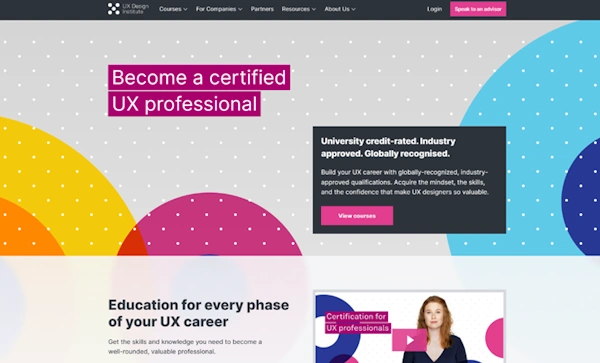
This all creates an eye-catching entrance to the site, and it wastes no time in drawing your attention to two particular buttons: “View Courses” and “Speak to an Advisor”. That it uses the warm pink color for those two buttons while leaving the other interactive elements in the header nav dark helps to guide the user’s journey more efficiently, leading them faster to the services that the visitor wants and that UX Design Institute offers.
Aesthetic-Useability Effect
The ‘aesthetic-usability effect’ refers to the phenomenon where visually appealing design elements enhance a user’s perception of an application or website’s functionality. For example, a well-designed, aesthetically pleasing interface may lead users to perceive the platform as more user-friendly and overlook minor usability flaws, such as complex forms or navigation. Essentially, when a site features strong aesthetic qualities, users are more likely to enjoy the interaction process and feel positive about accomplishing tasks, even if the design is not perfectly intuitive.
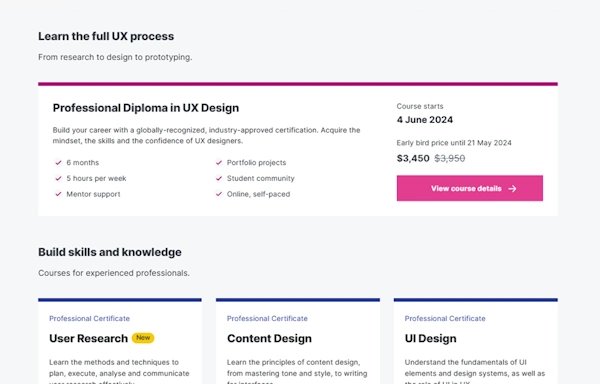

In the UX Design Institute site, clicking on a “View course details” button will take you to a new page with multiple buttons made to present you with a contact form, speak with an advisor, or take you directly to enrollment. Maintaining their aesthetics strategy of having colored buttons that draw the eye and guide the user journey, this keeps the user engaged and creates a sense of ease in getting from start to finish—every step feels like progress.
Accessibility and Inclusion
Accessibility and inclusion in aesthetics refers to the integrating of elements that improve useability for users of diverse abilities, needs, and even cultural backgrounds. This also includes making a UI that is more friendly for users with disabilities.
Accessibility measures can include ensuring proper color contrast, adjusting typography, and even changing the layout.

The UX Design Institute promotes accessibility through its use of both color and typography. The bold white lettering contrasts effectively with the warm colors. The UX Design Institute even makes sure that the two action buttons at the bottom of this image are properly colored to contrast with the background color they are positioned over.
Brand Identity
Brand identity in aesthetics is how users, visitors, and customers will come to associate with your business. Many successful companies are often recognized because of their brand identity, whether it’s a logo, a certain kind of layout, or even a catchphrase. On a website or application, brand identity can be achieved through the consistent and effective application of colors, typography, or imagery.
The UX Design Institute certainly nails their brand identity, both through their logo and the consistent use of particular shape: the circle.

Upon entering the UX Design Institute’s website, their layout follows a Z-pattern beginning with their logo of five circles. The user’s view would typically follow along the header nav before trailing down to the well-contrasted text. Meanwhile, the circle imagery continues with small white dots which serve to break up the off-white background. Two large circles (each with a smaller one inside) serve to help frame the bottom of this image and establish the site’s color palette.
Consistency in color and imagery is vital to brand identity and UX Design Institute nails it here!
Frequently Asked Questions
What Are the Key Elements of Aesthetics in UX Design?
The key elements of aesthetics in UX design involve the combination of typography, imagery, color, layout, spacing, and consistency. Making these elements work together is what makes for effective aesthetics, creating both a visually appealing website and application UI while also working to enhance user engagement and useability: beauty with function!
What are Common Mistakes in Implementing Aesthetics in UX Design?
Some of the most common mistakes in implementing aesthetics in UX design include:
- Creating an imbalance between aesthetics and functionality.
- Cluttered layouts.
- Annoying users with too many pop-ups.
- Ignoring or not promptly addressing user feedback and user needs.
- Using colors that do not contrast well or typography that’s hard to read.
- Designing for yourself instead of designing for your audience.
How Can Aesthetics Be Balanced with Functionality in UX Design?
In order for aesthetics to be balanced with functionality in UX design, it is essential to design a user journey that is efficient but doesn’t compromise visual appeal. This means building around a user-centered design that maintains clarity, consistency, and a natural visual hierarchy. Visual elements should all serve a purpose.
Revisit A Section
- What is Aesthetics in UX Design?
- What Are the Key Elements of Aesthetics in UX Design?
- How Does Aesthetics Impact User Experience?
- How to Measure Aesthetics in UX Design?
- UX Design Aesthetics at UX Design Institute
- User Experience at UX Design Institute
- Aesthetic-Useability Effect
- Accessibility and Inclusion
- Brand Identity
- Frequently Asked Questions
- What Are the Key Elements of Aesthetics in UX Design?
- What are Common Mistakes in Implementing Aesthetics in UX Design?
- How Can Aesthetics Be Balanced with Functionality in UX Design?
